Traditionally particle analysis is performed either by a laser based light scattering with particle patterns captured by a photodetector or by taking lens-based microscopy images of the particles in flow with follow-on analysis. Laser scattering methods are fast, but lack ability to distinguish morphology and the type of particles. They also lack accuracy in detecting larger particles. Lens-based imaging microscopy methods are slow in throughput, but provide detailed analysis of the shape and other characteristics of the particles directly from the image data. Such systems, however, are expensive, require extensive maintenance and sample preparation.
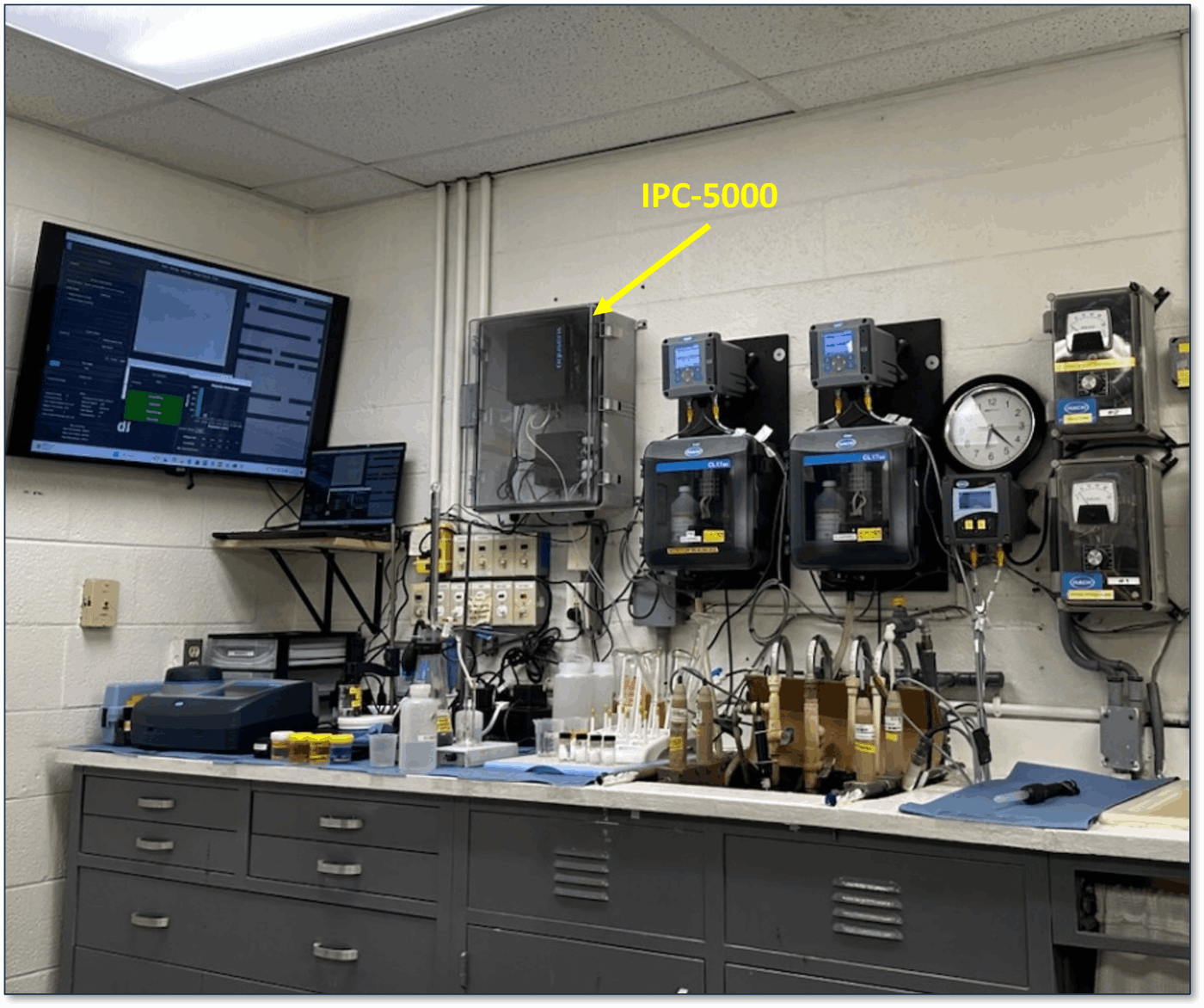
Based on the Aqusens platform, Lucendi introduced two intelligent particle analysis systems - IPC1000 and IPC5000. Both of these are fundamentally advanced holographic imaging systems that capture and analyzes intensity and phase image data of all objects flowing through the sensing chamber. While IPC1000 is optimized for particle counting applications, IPC5000 is designed with substantially more advanced capabilities in detailed AI-based image analysis for specific identification and tracking of pathogens, microplastics, as well as other organic and in-organic matter.
IPC5000 is an advanced AI-based algae and particle characterization platform that automatically identifies and creates holographic images for all objects from 3 micron to 4 millimeters flowing through its large observational volume. This image data is then processed with proprietary AI algorithms to identify object’s characteristics, such size, shape, color and phase properties. Furthermore, Aqusens AI can be customized to perform specific identification of objects of interest, such as harmful algae, cyanobacteria, other pathogens, microplastics and other pollutants.
IPC5000 is designed to provide an unprecedented level of analytics about the type of biological and other contaminants in raw water, track the treatment efficiency, and leverage this information to optimize water treatment operations and approaches. Furthermore, IPC5000 operates automatically supporting scalability and operational efficiency. IPC5000 further offers multiple options, including, fluorescence measurements, self-cleaning capabilities, monitoring of multiple sources, as well as various other customization possibilities.
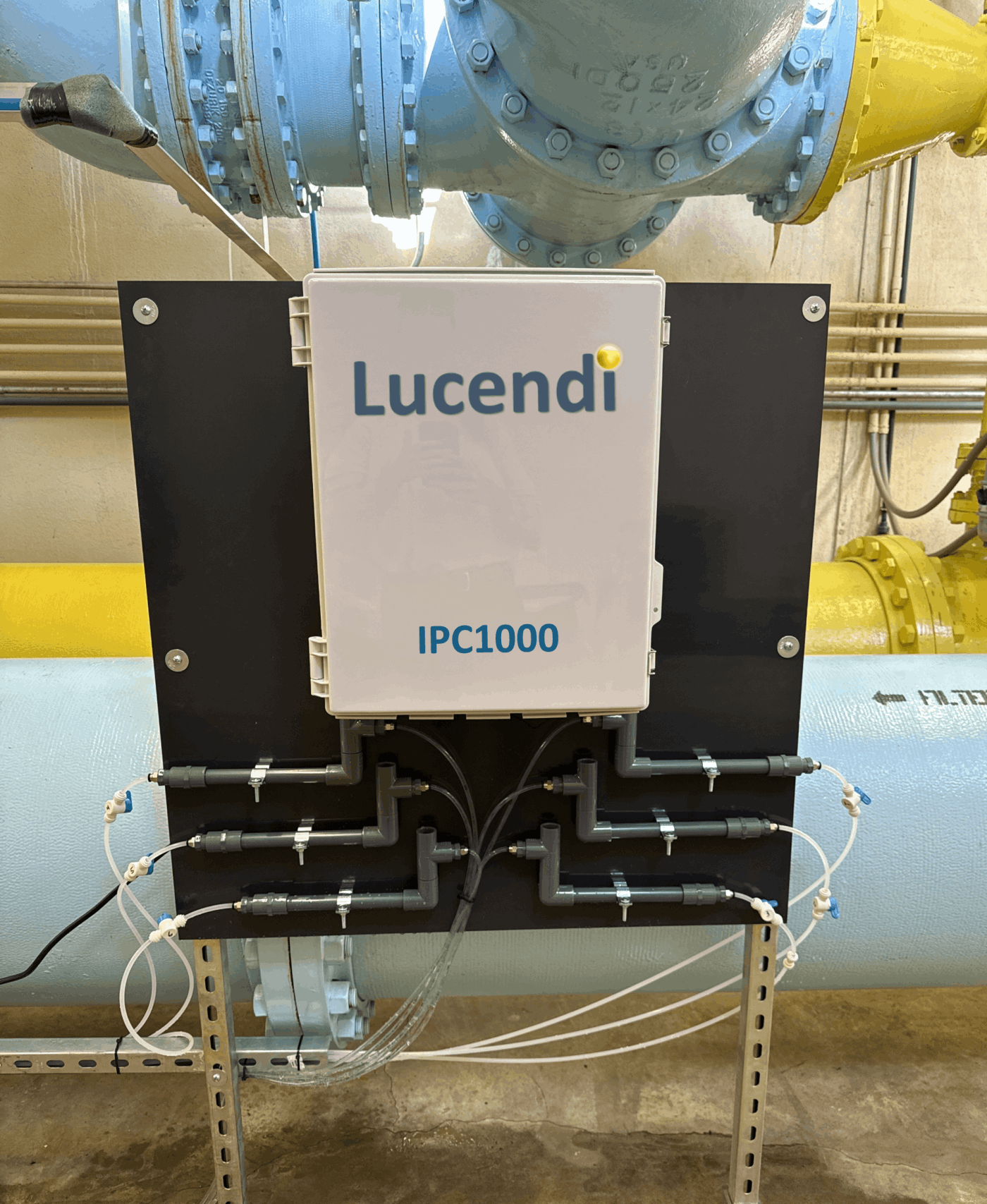
IPC1000 is an advanced holographic particle counter that captures and analyzes intensity and phase image data of all objects flowing through its sensing chamber. Unlike existing solutions, IPC1000 does not interpret, but rather directly measures the size, shape and morphology of the particles. Because the system operates on image data, it “sees” the particles and differentiates between spherical and non spherical objects, can identify and ignore bubbles. IPC1000 characterizes objects equally well no matter if it is a 3 micron particle or a 4 millimeter fiber. IPC1000 is THE FUTURE of liquid particle counters!
